 |
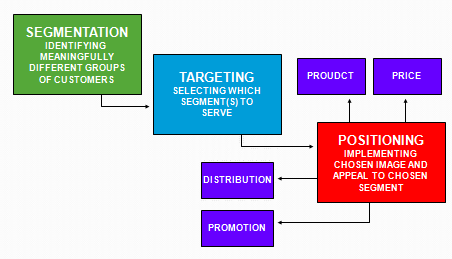
| Picture 1. Segmentation - Targeting - Positioning |
We should keep in mind that rarely two different customers to have exactly identical needs. In a textbook example KONE would be able to identify profitable customers and then treat each one of those individually according to their needs. In relatively large market like Korea, this would probably require more resources than is practical or profitable for KONE. This is why, if KONE chooses to enter the market, it should target offer at companies who really do want them, need them and are willing to pay for them.
The choice of target segment depend on several factors. The first step would be to figure out how satisfied/well-served the identified segments are by other elevator manufacturers. Targeting a segment that is well served would be more difficult and time consuming than targeting one whose needs are not currently being served. Secondly, KONE should know how big the segment is and does it have growing potential. The third step would be to identify does KONE have strengths that would help to appeal particularly to one group of consumers.
After the careful segmentation(as described earlier in the blog) KONE should target the Engineering
and Construction contractor companies in Korea. They shoudl target the contractors because in a turn-key delivery (which most of the projects in South Korea are) the contractor decides the model of the elevator. KONE should start with the companies they already worked with in other countries and who already know the quality and their way of working .
Sources:
B2B International: Business to Business targeting http://www.b2binternational.com/
Entrepreneur: Target Market http://www.entrepreneur.com/
USC Marchall: Segmentation, Targeting, and Positioning http://www.marshall.usc.edu/

No comments:
Post a Comment